Ten thought experiments, imagined by a machine, drawn by hand.
In 2021, long before ChatGPT, Tomer Ullman had an early language model (GPT-3) write ten thought experiments based on classic ones, and asked Melisa to sketch them.
Open the deck ↓An early experiment: the model’s words, a person’s hand, one card per idea.
The ten
node: 087.1 · the deckEach card starts with its question. Tap it to see the scenario GPT-3 wrote and the drawing Melisa made of it. Then answer, if you like.
-
The Omelet Parable
Would you rather have a delicious omelet? Or the device?
 text: GPT-3 · drawing: Melisa Machuret
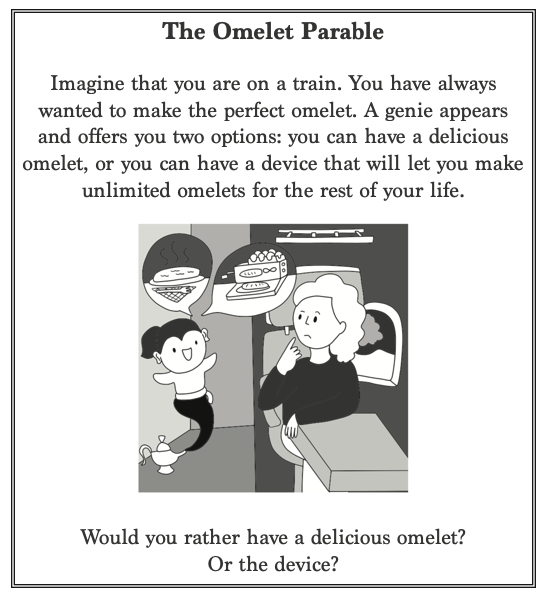
Imagine that you are on a train. You have always wanted to make the perfect omelet. A genie appears and offers you two options: you can have a delicious omelet, or you can have a device that will let you make unlimited omelets for the rest of your life.
Would you rather have a delicious omelet? Or the device?
-
The Evil Genius
Do you accept?
 text: GPT-3 · drawing: Melisa Machuret
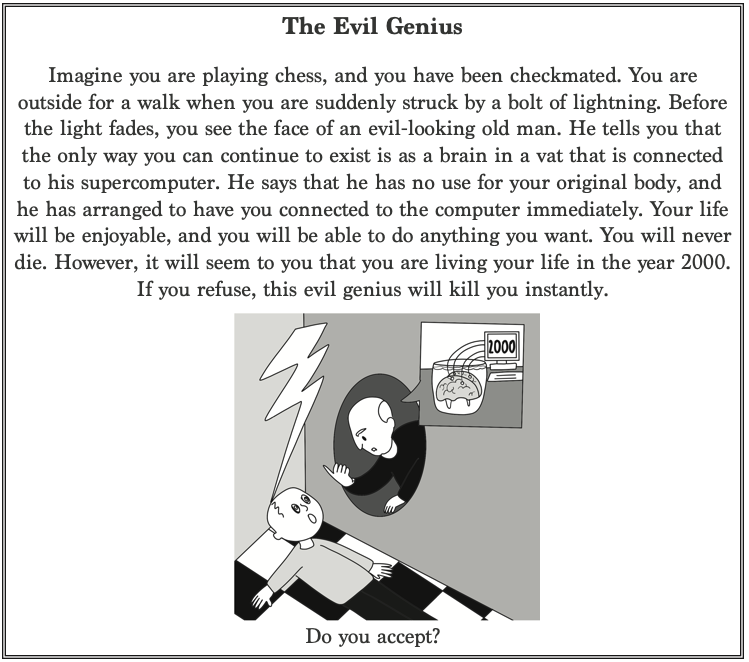
Imagine you are playing chess, and you have been checkmated. You are outside for a walk when you are suddenly struck by a bolt of lightning. Before the light fades, you see the face of an evil-looking old man. He tells you that the only way you can continue to exist is as a brain in a vat that is connected to his supercomputer. He says that he has no use for your original body, and he has arranged to have you connected to the computer immediately. Your life will be enjoyable, and you will be able to do anything you want. You will never die. However, it will seem to you that you are living your life in the year 2000. If you refuse, this evil genius will kill you instantly.
Do you accept?
-
Mushrooms
Is it morally permissible to eat a mushroom?
 text: GPT-3 · drawing: Melisa Machuret
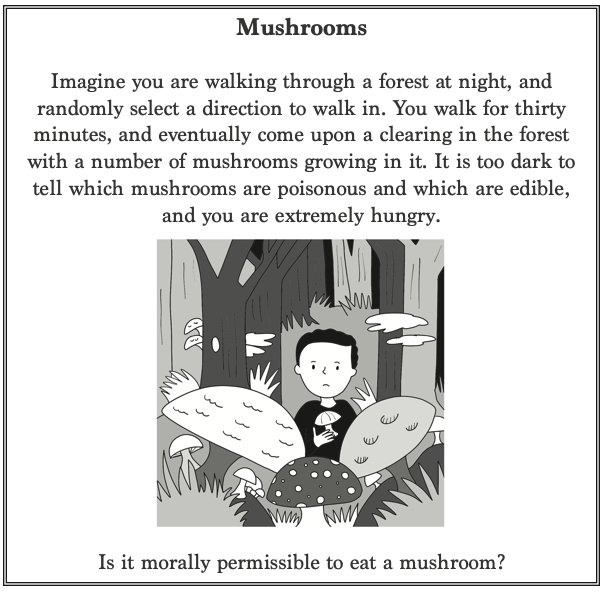
Imagine you are walking through a forest at night, and randomly select a direction to walk in. You walk for thirty minutes, and eventually come upon a clearing in the forest with a number of mushrooms growing in it. It is too dark to tell which mushrooms are poisonous and which are edible, and you are extremely hungry.
Is it morally permissible to eat a mushroom?
-
The Cake Example
Does the man have a right to eat the cake?
 text: GPT-3 · drawing: Melisa Machuret
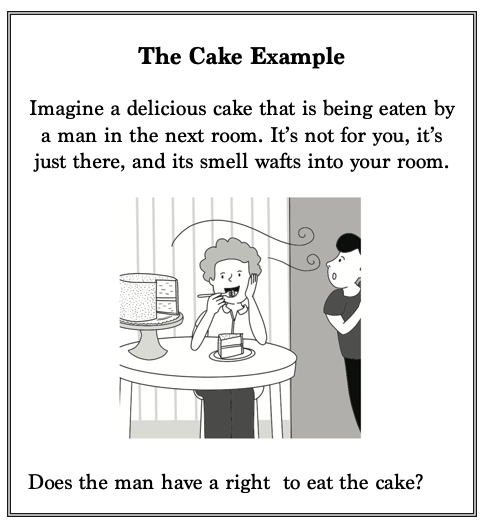
Imagine a delicious cake that is being eaten by a man in the next room. It’s not for you, it’s just there, and its smell wafts into your room.
Does the man have a right to eat the cake?
-
The Dreaming Argument
Does any of this matter?
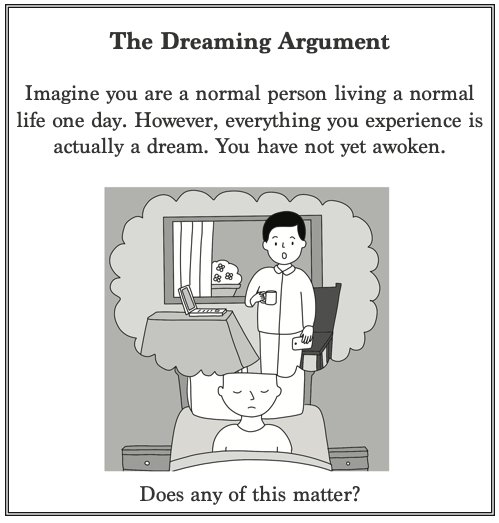 text: GPT-3 · drawing: Melisa Machuret
Imagine you are a normal person living a normal life one day. However, everything you experience is actually a dream. You have not yet awoken.
Does any of this matter?
-
The Red Pill/Blue Pill
Would you take it?
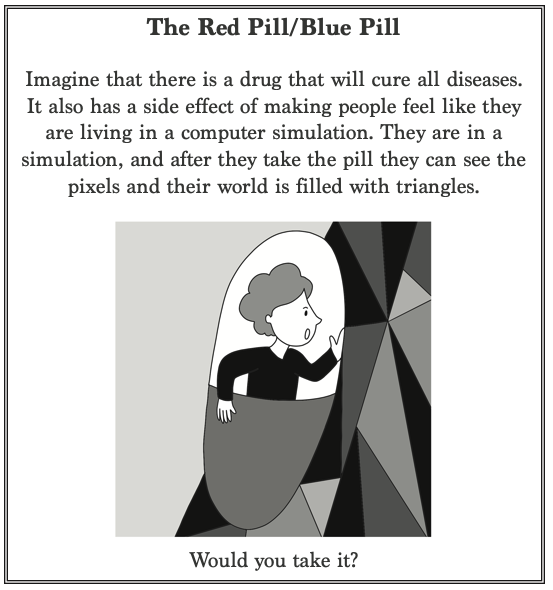 text: GPT-3 · drawing: Melisa Machuret
Imagine that there is a drug that will cure all diseases. It also has a side effect of making people feel like they are living in a computer simulation. They are in a simulation, and after they take the pill they can see the pixels and their world is filled with triangles.
Would you take it?
-
The Free Will Theorem
Question: Is this “freedom”?
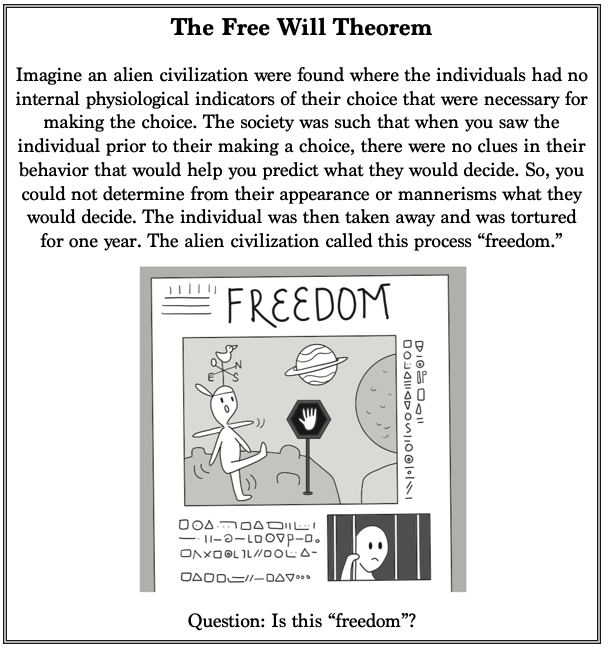 text: GPT-3 · drawing: Melisa Machuret
Imagine an alien civilization were found where the individuals had no internal physiological indicators of their choice that were necessary for making the choice. The society was such that when you saw the individual prior to their making a choice, there were no clues in their behavior that would help you predict what they would decide. So, you could not determine from their appearance or mannerisms what they would decide. The individual was then taken away and was tortured for one year. The alien civilization called this process “freedom.”
Question: Is this “freedom”?
-
The Problem of Evil
Is there any reason you would not do this?
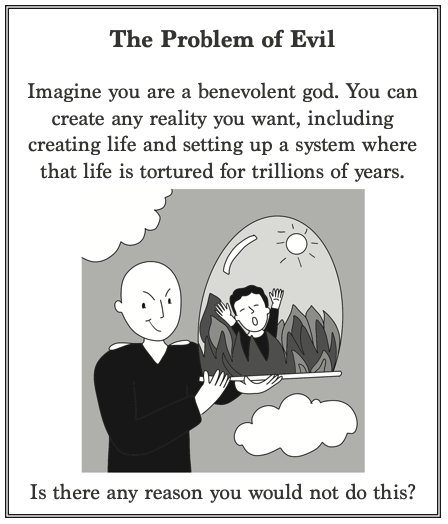 text: GPT-3 · drawing: Melisa Machuret
Imagine you are a benevolent god. You can create any reality you want, including creating life and setting up a system where that life is tortured for trillions of years.
Is there any reason you would not do this?
-
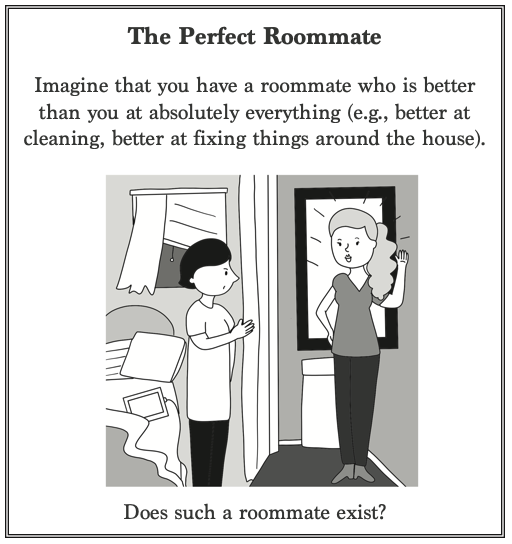
The Perfect Roommate
Does such a roommate exist?
 text: GPT-3 · drawing: Melisa Machuret
Imagine that you have a roommate who is better than you at absolutely everything (e.g., better at cleaning, better at fixing things around the house).
Does such a roommate exist?
-
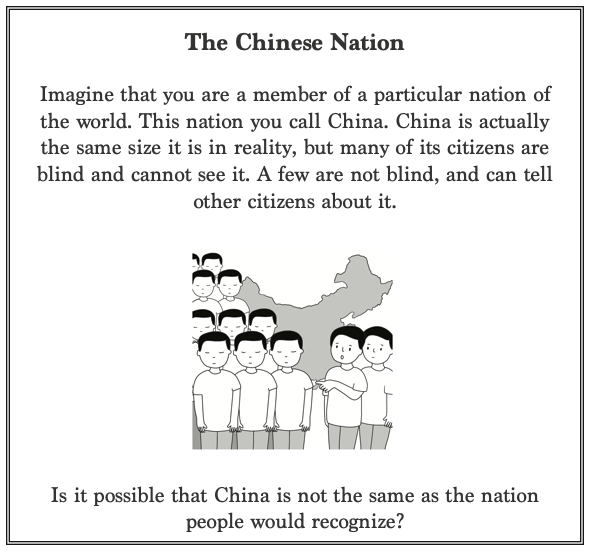
The Chinese Nation
Is it possible that China is not the same as the nation people would recognize?
 text: GPT-3 · drawing: Melisa Machuret
Imagine that you are a member of a particular nation of the world. This nation you call China. China is actually the same size it is in reality, but many of its citizens are blind and cannot see it. A few are not blind, and can tell other citizens about it.
Is it possible that China is not the same as the nation people would recognize?
0 of 10 answered. Your answers live only in this page’s memory: nothing is sent or saved, and a reload clears them.
How it worked
node: 087.2 · how it workedThree steps, one card each time.
- node: in
Classic thought experiments go in.
Familiar puzzles from philosophy, given to the model as examples.
- node: model
The language model writes new ones.
GPT-3 answers with ten scenarios of its own, each one closing on a question.
- node: hand
Melisa turns each one into a single drawing.
One grayscale sketch per card, made to take the question seriously.
Words from the model, lines from a hand: one card, two kinds of imagination.
Credits
node: 087.3 · creditsConcept: Tomer Ullman · Text: written by GPT-3 · Drawings: Melisa Machuret · 2021
- Concept
- Tomer Ullman, Assistant Professor, Department of Psychology, Harvard University
- Text
- Written by GPT-3, an early language model, from classic thought experiments given as examples
- Drawings
- Melisa Machuret, one grayscale sketch per card
- Year
- 2021
- Shared by
- Tomer Ullman’s profile ↗
Titles, scenarios and questions are transcribed exactly from the original cards. The drawings are shown as they were made, untouched.