A plain sketch, no paint yet
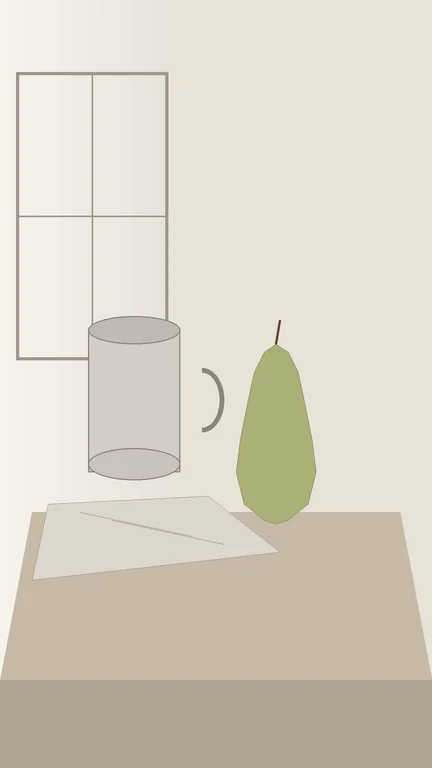
Every version starts from the same simple reference sketch. It fixes where things sit: the window on the left, the cup, the pear, the cloth in front.
It says nothing about paint. That job belongs to the words.
Three blocks, one job each
This is the instruction, word for word, as it went to the model. It is one system with three parts. Two of them never move.
A quiet still life by a pale four-pane window on the left. On a wooden table: one classic SINGLE-BULB green pear (one smooth rounded body, a narrow neck, and a short stem — NEVER a stacked or double-bulb shape), one plain white ceramic cup with its handle on the RIGHT and NO saucer, and one softly folded light cloth in the foreground. Soft natural side light from the left window. Same object positions, scale, cup design, cloth fold, window placement, camera angle and framing in every version. Neutral timeless palette of soft greens, cream, warm wood and muted gray. No brands, no people, no text, no signatures, no watermark.
Keep the scene lock identical. Change only how the paint sits on the surface.
Around these three blocks sit two framing lines: start from the reference sketch, and a tall 9:16 frame. The pictures on this page are cropped to 4:5.
Same scene, three surfaces
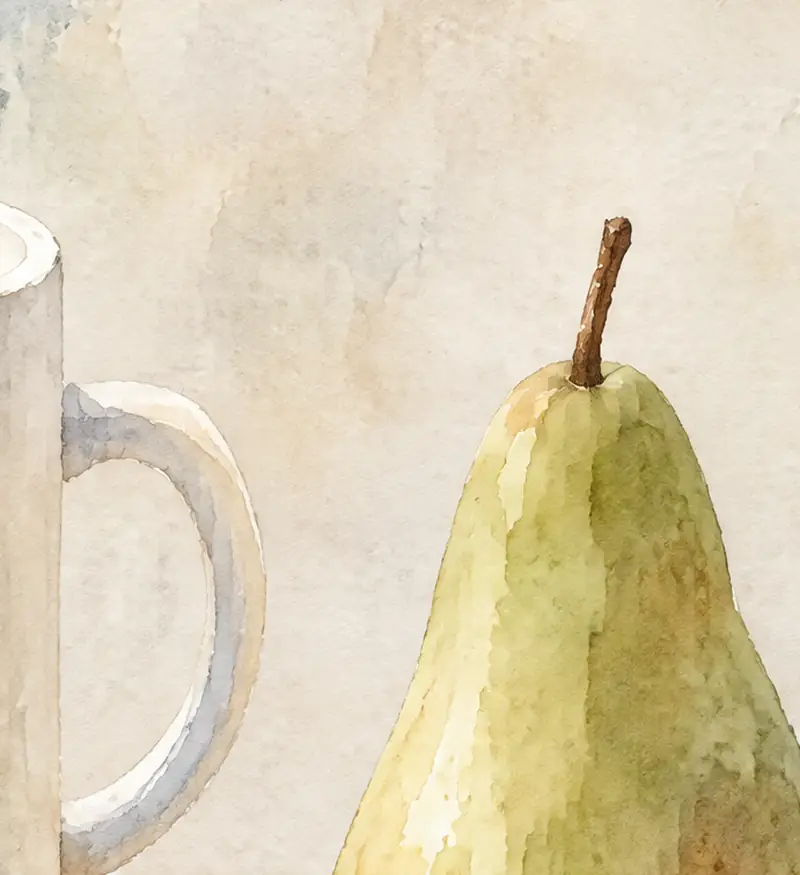
Switch the paint. The table, the cup and the pear stay where they are. Then tap an underlined phrase and look for it in the closeup.
Read it, then sharpen the words
This is round two. Round one looked like this:
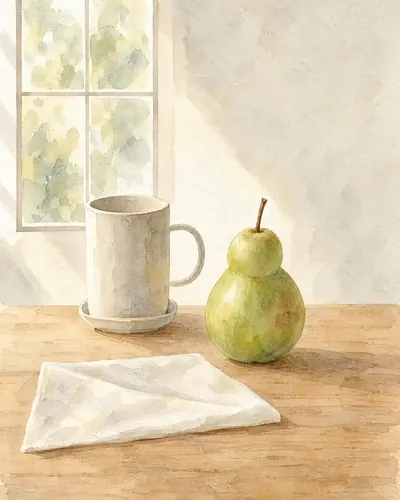
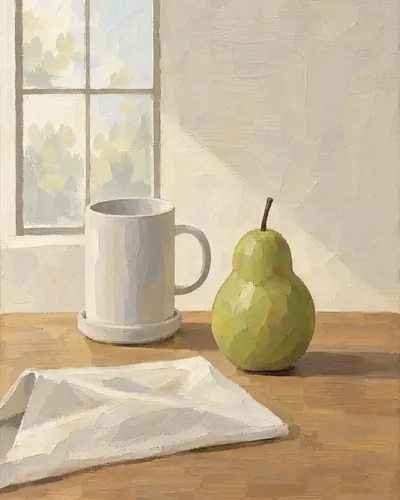
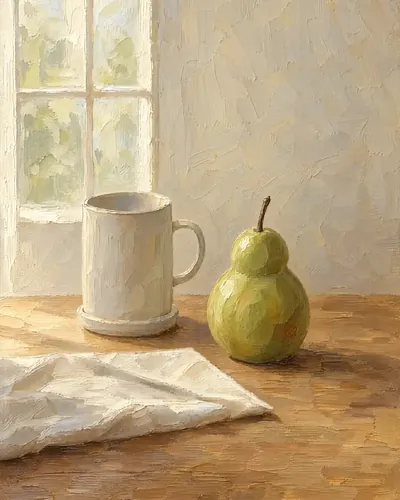
Acrylic and oil came out close. The watercolor read only partly transparent. And the pear grew a stacked, double-bulb shape in all three, with a saucer under the cup that nobody asked for.
So I didn’t go looking for a better prompt. I read each picture against its own words, found where the words were soft, and rewrote them. Highlighted below: what round two says that round one didn’t.
Two kinds of words did the work. Words that name how the paint behaves: white paper left untouched, masked edges, palette-knife planes. And words that name what it is not: not acrylic, not oil, not watercolor.
Round two reads more clearly. Three paints now behave like three paints, and there is one pear, one bulb, in all three. It is still not finished. The scene drifts a little: the window, the cup handle and the cloth fold shift between versions, and the acrylic window turned to blue sky. That is why I say the same scene, not an identical one. Each round is a full pass: write, render, look closely, rewrite.
the loop is the method · the instruction is the work